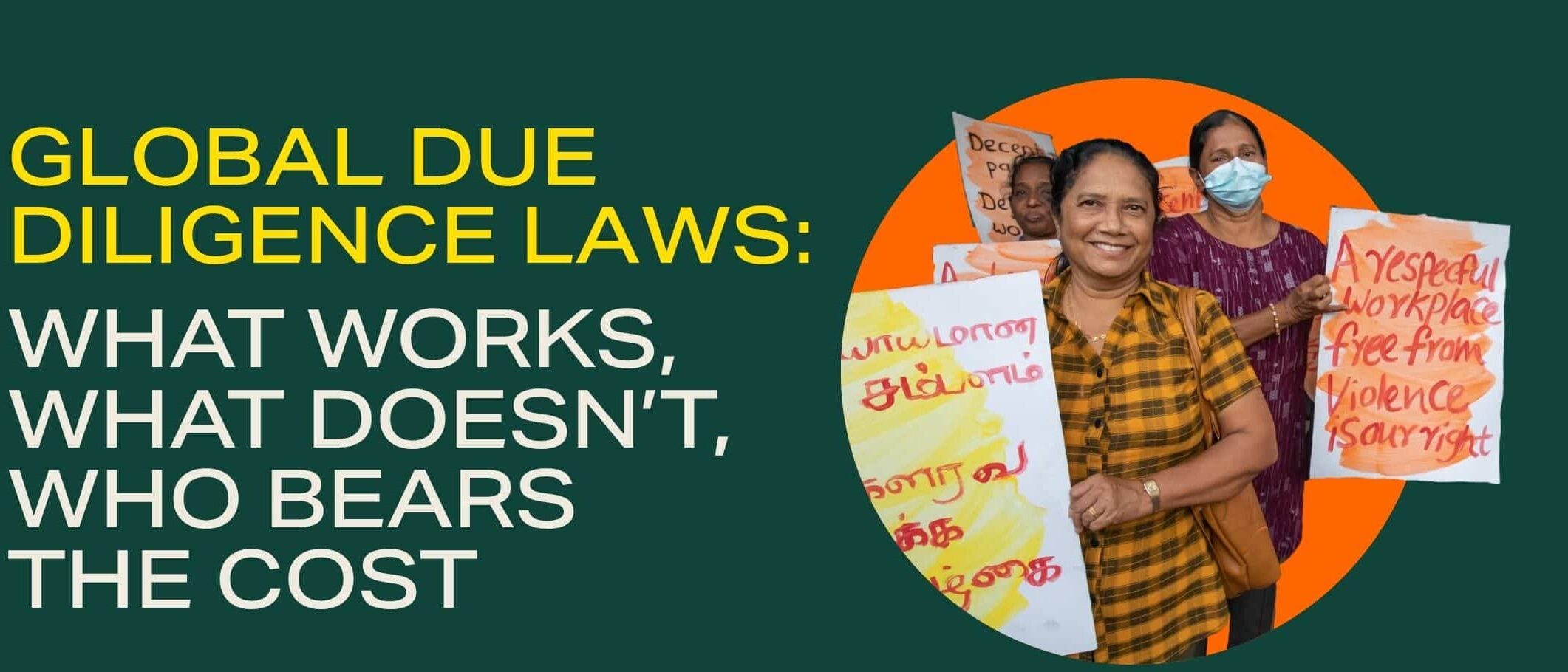
Across the world, the clothes we wear are often made in conditions most people never see. Women working in garment factories, who make up the majority of the workforce, face low wages, unsafe conditions, and, too often, harassment and violence.
Two reports from The Circle examine how laws in the UK, EU and globally are responding to these challenges. Drawing on an analysis of 17 due diligence frameworks, they ask a simple question:
Are current laws actually protecting workers?
Both the UK and EU have committed to protecting human rights, promoting decent work, and tackling violence against women and girls.
But these reports show a gap between those commitments and what is happening in global supply chains.
Without stronger laws, exploitation continues – and responsible businesses are undercut.
What the reports cover
- A review of 17 global due diligence laws
- Real-world evidence from women garment workers
- Analysis of what works and what doesn’t
- Clear recommendations for the UK and EU
What we found
- Many laws focus on reporting, not action
- Key parts of supply chains are often left out
- Enforcement is weak, with few real consequences
- As a result, women workers remain unprotected

Strong, enforceable laws are essential
If governments are serious about tackling exploitation and violence in global supply chains, they must move beyond voluntary commitments to protect workers and create a level playing field.
Read the full reports: